Showing posts with label Creative Commons licensing. Show all posts

Sunday, July 19, 2009

Big Brother Tactics Give Amazon A Black Eye


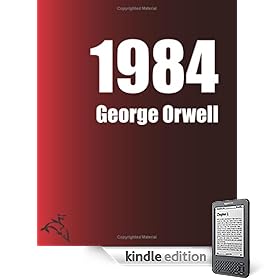
This morning, hundreds of Amazon Kindle owners awoke to discover that books by a certain famous author had mysteriously disappeared from their e-book readers. These were books that they had bought and paid for—thought they owned.

But no, apparently the publisher changed its mind about offering an electronic edition, and apparently Amazon, whose business lives and dies by publisher happiness, caved. It electronically deleted all books by this author from people’s Kindles and credited their accounts for the price. - More: NY Times

I find the above incident hardly surprising. Recently I was notified by Roku that my new player now had the ability to obtain video-on-demand movies from Amazon. I went up to Amazon to activate my player for this service only to discover (by reading the service agreement's fine print) that Amazon, even though they were charging $14.99 to buy a downloadable movie - a price almost as high as a new release DVD - they advised that you download the movie and watch it as soon as possible because they did not guarantee that the film you purchase would be available for future viewing if the studio that released the film should decide to no longer offer it in downloadable format. The only thing surprising about the Kindle incident was that Amazon actually refunded the purchase price. I assumed that Amazon, by making such a disclaimer in their VOD agreement, was negating any liability for such an act and was not obligated to issue any refunds.

Anyway, needless to say, although I activated my Roku player for Amazon VOD services, I have never purchased a movie in that format. As for renting a movie from Amazon, I think Netflix is far more economical, even if you have to wait a bit for a disc and I can choose from hundreds of instantly available titles on my Roku device for free in the meantime.

Thursday, November 27, 2008

Inspired by interview with Lawrence Lessig

A friend recently sent me a link to Charlie Rose's interview with Lawrence Lessig. Professor Lessig has written a new book entitled "Remix" about the new hybrid economy between the sharers of the Web 2.0 environment and online commerical interests. He points out how such collaboration can be used to end the dependence of politicians on big corporate lobbyists - much the same way that Barak Obama did in the generation of money for his campaign.

He spoke very admiringly of the value of such resources as Wikipedia and how the energy of sharing economies can be just what is needed to infuse enthusiasm into economic ventures in the online commercial environment. He pointed out, though, that commercial interests need to gain respect for the intelligence and creativity of those engaged in producing user-generated content. He mentioned that people like George Lucas, who created a remix studio with Star Wars images and clips but claims copyright to any material produced by visitors - is an outdated "Hollywood mogul" approach and does not show proper consideration to the collective intelligence of the online community. I, personally, find it ironic that someone who is so adamant about defending their own copyright is so willing to rip off someone else's.

Recently I was reading about YouTube's problems trying to negotiate partnerships with the major studios because the Hollywood studios were disdainful of YouTube's millions of "amateurs" and how their user-generated content is viewed as cluttering up the YouTube site. I had also just read about a new feature YouTube has added called video annotation that includes the ability to link videos into a unique narratives. So, I wrote to YouTube and suggested they approach the studios about offering a remix studio containing clips of Creative Commons noncommerical-licensed clips for use in production of mini-choose-your-own-adventure type videos or alternative trailers using the new video annotation feature. All derivatives would not then compete with the studios commercial offerings, because of the noncommercial rights provisions, but would provide hours of creative enjoyment to site visitors, who in turn would be exposed to studio advertising for much longer periods while working in the remix studio than they would be simply viewing clip after clip of content. This would turn the demographics of typical YouTube site visitors to a definite advantage to the studios and a vibrant alternative to passive viewing of full length features on Hulu.com. Besides, I know I would rather watch a full length feature streamed to a Netflix device connected to my big screen TV than slouched in my chair in front of my computer in my home office alone.

You will need some time to watch the interview with Mr. Lessig as its 38 minutes long, but I think it is worth every minute of it!

http://www.charlierose.com/view/interview/9618